Reinventing Life After 40
Your first career was about success. Your second act can be about freedom.
Freebound Life is for experienced professionals who have built successful careers and are starting to ask a different set of questions. What is my experience worth now? What do I actually want the next twenty years to look like? How do I create more freedom without throwing away everything I have built?
This site works through those questions across four connected areas: career, money, purpose, and digital leverage.
Who’s Writing This
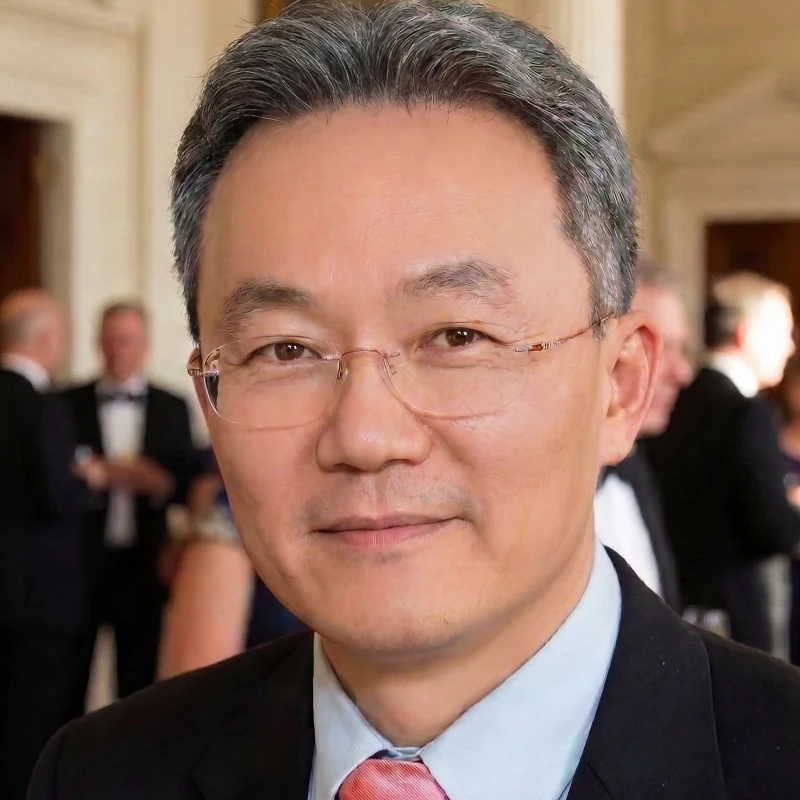
I’m Ian Hwang.
I was born in Seoul and grew up in Richmond, on the edge of London. I went to university in New York, and for the next three decades I worked in finance, moving from one city to the next across the United States and Asia. It was not a straight line. I won’t walk you through the whole itinerary. Most of it would not help you, and the parts that would are already in the essays. In 2025 I retired and came back to Seoul, which is where I write this from.
What I didn’t expect was how disorienting that would be.
The money question — the one I’d spent a career around — turned out to be the easy part. The harder question arrived on the first Monday when nothing was scheduled: if I’m no longer the thing printed on my business card, what exactly am I?
That question is why Freebound Life exists.
Between posts I write shorter notes on LinkedIn, including a Sunday newsletter, The Second Half.
When the Old Roadmap Stops Working
For most of our working lives the roadmap is clear enough. Get educated. Build a career. Accumulate experience. Become valuable. Earn more. Build security. For two or three decades it works remarkably well.
Then something changes. Not necessarily a crisis, and not necessarily a failure. Sometimes everything still looks fine from the outside: you have the experience, the credibility, the income, the reputation. And yet the question becomes harder to ignore. What happens next?
Not next quarter. Not after the next promotion. Not even after retirement. What happens across the next twenty years?
I found that I didn’t have a particularly good answer. More surprisingly, neither did many of the accomplished people I asked. That gap is where Freebound Life begins.
Reinvention Usually Starts With Success
We tend to assume reinvention begins when something breaks — a layoff, a failed business, a health scare, a financial shock. Sometimes it does. But often it begins somewhere much quieter: after success.
The career worked. The goals were achieved. The life was built. The problem is that the things that created that success — the salary, the title, the expertise, the identity attached to the work — can become the very things that make change difficult. The Success Trap is the name this site gives to that mechanism.
The work that once absorbed you may no longer do so. Goals that once gave structure to your week stop pulling. And a twenty-year horizon that once seemed obvious becomes difficult to see.
This is not necessarily a crisis. It may simply be a signal that the old definition of success has reached its useful limit.
Then AI Changed the Question
There is another layer now. AI is changing the economics of knowledge work faster than most previous technological shifts. Information is easier to access. Some forms of expertise are easier to replicate. Skills that once provided a durable advantage can become commodities surprisingly quickly.
For professionals over 40, that raises uncomfortable questions. Does experience still have value? What happens to decades of expertise when an industry rearranges itself in eighteen months? Which parts of what I know are becoming less valuable, and which parts are becoming more valuable?
I don’t think these questions deserve easy reassurance. But I do think they point toward something useful. The future is unlikely to belong to the youngest person in the room, or to the most technically capable one. It will increasingly favor people who can combine technology with judgment, experience with adaptability, and knowledge with the ability to apply it where it matters.
Technology can accelerate learning. It cannot download judgment accumulated over decades.
Experience Is Not the Problem
One of the most persistent mistakes experienced professionals make is assuming that reinvention means starting over. They picture walking away from everything, going back to school, becoming a beginner again at fifty. The emotional and financial cost feels overwhelming. So they don’t move.
But good second acts rarely begin from zero. The executive who moves into advisory work doesn’t start over. The specialist who turns decades of hard-won knowledge into something others can use doesn’t start over. The manager who combines thirty years of pattern recognition with tools that didn’t exist five years ago doesn’t start over.
They change the angle. The experience stays. What changes is how that experience is used.
That is one of the central ideas behind Freebound Life.
What Freebound Life Is About
There is a growing group of experienced professionals asking questions that conventional career advice doesn’t answer particularly well. How do I change direction without discarding what I’ve built? How do I create more flexibility without gambling away my security? How do I find meaningful work after achievement stops being enough? How do I turn experience into something that stays valuable as technology changes? And how do I design the next twenty years rather than simply wait for them to happen?
Most advice sits at one of two extremes. Keep going. Work harder. Wait for retirement. Or: Quit everything. Follow your passion. Start over.
Neither describes the reality of most people over 40. They have responsibilities. They have financial commitments. They have relationships, reputations, accumulated knowledge, and a life worth protecting. They don’t need an escape. They need a better design.
That’s what Freebound Life is here to explore.
Four Areas. One Bigger Question.
Everything published here connects to four areas.
- Career — how to rethink work, expertise, identity, and the possibility of a second career.
- Money — how to create financial flexibility and make better decisions about the resources you’ve spent decades building.
- Purpose — how to think about meaning, contribution, and identity when achievement is no longer the only measure that matters.
- Digital Leverage — how technology and AI can extend the value of experience rather than simply compete with it.
These aren’t separate problems. They are parts of the same larger question: how do you build a life with more freedom without throwing away the life you already built? The Start Here page suggests where to begin, depending on which of the four is bothering you most.
What This Is Not
Freebound Life is not a retirement blog. It is not a FIRE community. It is not a digital-nomad guide. It is not a passive-income fantasy. And it is not another collection of motivational advice telling you to quit your job and reinvent yourself overnight.
Real reinvention is usually much less dramatic. It is a series of deliberate decisions that compound over time. You don’t need to escape the life you built. You may simply need to redesign it.
I’m Not Writing From the Finish Line
I’m not writing from the far side of this transition as someone who has everything figured out. I’m working through it too — reading, testing, questioning, and trying to understand what actually works when the first career has largely done what it was supposed to do and the next chapter is still being designed.
That is why Freebound Life is closer to investigation than instruction. I don’t want to tell you how to live your life. I want to explore the questions that become important when the old answers stop being sufficient.
Everything published here is meant to be practical, thoughtful, and honest. If an idea isn’t useful to someone making consequential decisions about the next stage of their life, it doesn’t belong here.
If This Sounds Familiar
If you’ve ever felt successful and vaguely unfinished. If you’ve wondered what your experience is worth in a market that keeps changing. If you’ve reached a point where the old definition of success no longer feels quite large enough.
You’re not behind. And you don’t need to become someone else. You may simply need a different blueprint for the decades ahead. That’s what Freebound Life is trying to build.
Get The Midlife Reinvention Blueprint
The free 20-page workbook for redesigning your career, money, and purpose after 40 — the four-pillar framework, a personal audit, the five defining questions, and a 90-day roadmap, including the worksheets for your freedom and coast numbers.
A Note on Advice
Freebound Life is an independent editorial project, not a source of personalized financial, legal, or professional advice. The ideas presented here are intended for education and exploration, and they cannot account for your individual circumstances.
For decisions with significant financial, legal, career, or other consequences, consult an appropriately qualified professional who understands your situation.
If you’re somewhere in the same passage — where the old plan has run out and the new one hasn’t fully arrived — you’re in the right place.