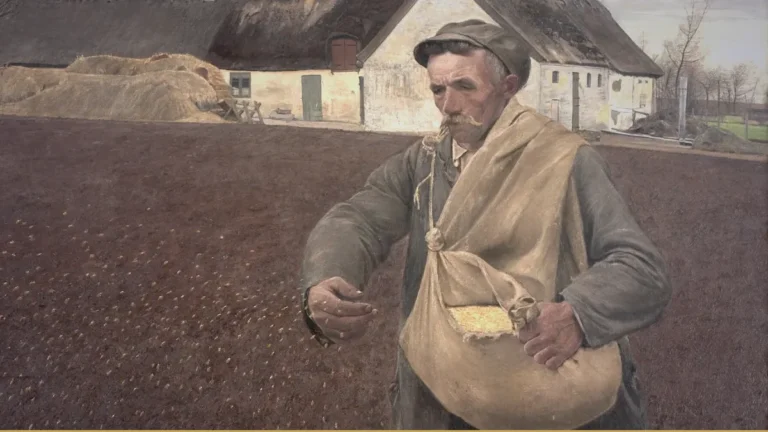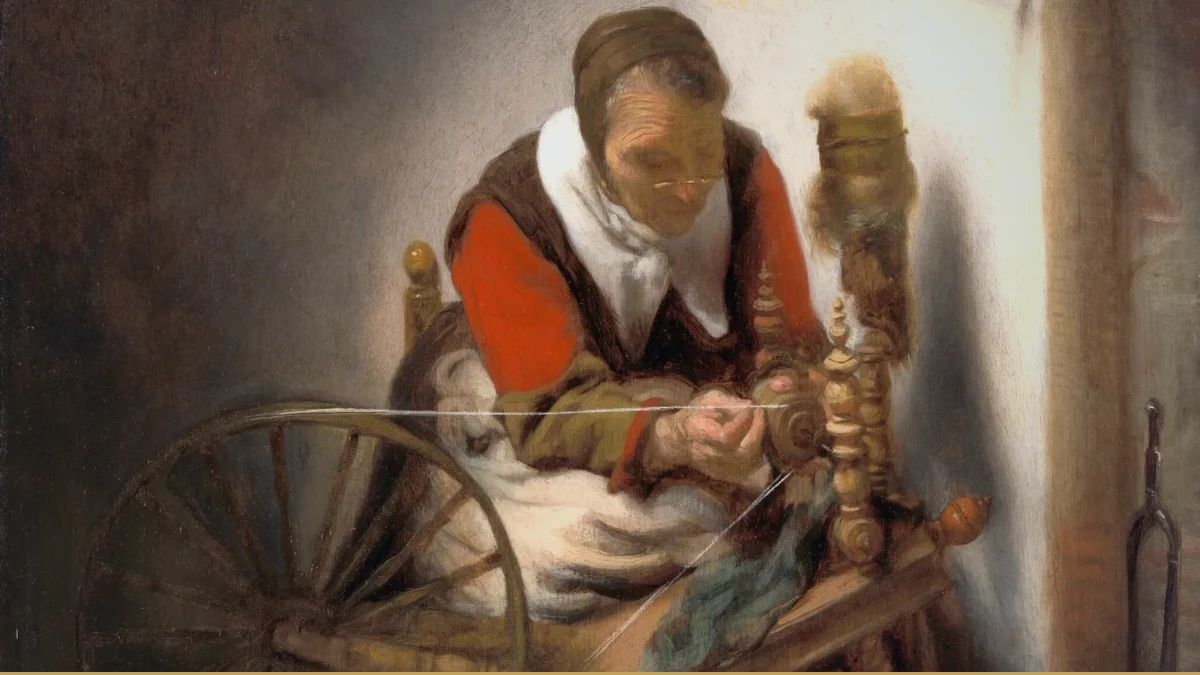
Picture two people who have done the same work for thirty years. Same field, same competence, roughly the same reputation. One of them works harder every year — more hours, more responsibility, more demand for their time — and stays, more or less, exactly where they are. The other seems to work less, and yet the opportunities keep arriving. The income keeps arriving. The freedom keeps expanding. From the outside it looks like luck, or timing, or some advantage nobody mentioned. It usually isn’t any of those things.
The difference is not how hard they work. It’s what their work does after they stop. One of them is running. The other, at some point, built a wheel.
For most of a career you are paid for one thing: your time. You show up, you solve the problem, you are paid, and when you stop showing up the payment stops with you. It is a fair trade and it works for decades. But it hides a quiet flaw. It does not compound. Every hour has to be spent again. Every result has to be earned again. You begin each year close to where you began the last one. That is the treadmill, and the cruel part is that getting better only makes it spin faster: more skill invites more demand, and more demand quietly costs you the freedom the skill was supposed to buy.
Early in my career there was a monthly report that nobody read, so everybody read the summary instead. A few years later people stopped reading the summary too and went into the meeting anyway. Nobody ever proposed killing it. That is what work looks like when it does not compound: it has to be produced again next month, and nothing produced last month is still doing anything for you.
This piece is about the alternative, and the good news is that it doesn’t require more experience. You almost certainly have enough already. It requires a different way of using it.
What Is the Expertise Flywheel?
The Expertise Flywheel is a way of using your experience so that the work you do once keeps working after you stop, turning a career’s worth of judgment into momentum that compounds, instead of hours you have to sell again every morning. A flywheel is a heavy wheel that stores motion; potters and engineers have relied on the principle for thousands of years, for one reason: a single push keeps paying off long after the pushing ends. The management writer Jim Collins borrowed the same image in his account of the flywheel effect from Good to Great: no single push explains the breakthrough, because the momentum is the sum of every push made in one direction.
Applied to a career, it means building assets out of what you know rather than renting out your presence. It is slow to start and it feels thankless at first, which is exactly why so few people build one. But once it turns, it changes the fundamental economics of your working life: your income stops being capped by the number of hours you can personally trade.
Why Experience Doesn’t Compound on Its Own
Here is the uncomfortable mechanism underneath the treadmill. Over a long career you become extraordinary at execution, taking a defined problem and reliably closing it, because every employer you’ve ever had selected for exactly that and paid you for it. What you rarely get to practise is origination: turning your own accumulated judgment into something that stands on its own, outside your head, without you in the room. The two skills look adjacent. They are not the same, and only one of them was ever tested.
So the raw material is never the problem. You already own what one might fairly call a warehouse of experience: the patterns, the shortcuts, the hard-won sense of which problem is actually worth solving. (If you’ve never taken inventory of it, the Transferable Skills Audit is the place to see what you’re actually holding.) The problem is that the warehouse just sits there. Nothing you know can travel or compound until it is given a form and sent out into the world, and for thirty years nobody required you to do that, because the salary arrived whether you did or not.
There is one more reason the flywheel stays rare, and it’s psychological rather than practical. At the start, a flywheel gives almost nothing back. You capture an idea and no one responds. You put it into the world and it seems to vanish. You do it again, and again, into what feels like silence. This is the point where most people quit — they mistake slowness for failure. But a flywheel is not broken when it’s slow. It is simply early. The treadmill, by contrast, feels productive immediately, which is precisely why the treadmill is crowded and the flywheel is nearly empty.
The week after I left, the messenger alerts stopped. For years they had arrived every few minutes, and now the phone just sat on the table. I refreshed it twice to make sure it was still working. It was. The meetings started at their usual hour without me, the decisions got made, and nothing anywhere required my attendance.
Almost everything continues without you. That is not a complaint. It is the argument for building something that continues without you on purpose. The five turns below are how that is built.
The Five Turns of the Expertise Flywheel
The machine has five turns. Each one feeds the next.
1. Capture. Most of what you know stays locked inside your head as a private sense of knowing. Capture is the moment it becomes a shape outside you: a framework, a method, a checklist, a written explanation of how you actually make a particular call. Nothing can travel until it has a form, and this first turn is the one almost everyone skips.
2. Express. A captured idea left in a drawer changes nothing. Expression is putting it in front of someone who needs it — an article, a talk, a lesson, a small guide. One piece of your judgment, made visible. It doesn’t have to be polished or large; it has to exist and be findable.
The bar is lower than it feels. A single short piece explaining one decision you make well, published where the people who need it might stumble on it, is a full turn. Where people stall is audience-anxiety. They wait until they have a platform before they express anything, when expression is the thing that builds the platform in the first place.
3. Signal. When you express the same understanding repeatedly, something forms around you: a reputation, a recognition that you are the person who sees this particular thing clearly. The call that used to go to someone else starts coming to you. You stop chasing opportunities and they begin, slowly, to arrive.
This is the quietest turn and the one that takes longest, because it happens in other people’s heads rather than yours. It shows up as small things first: someone forwards your piece, a stranger quotes your own phrase back to you, an introduction arrives unprompted. If you want to shorten it, deliberately building a personal brand after 40 is simply doing Signal on purpose rather than by accident.
4. Leverage. Now one hour of your work can reach many — not one client but an audience, not one project but a product. This is the turn that finally breaks the trade of time for money, and it’s where the flywheel connects to the menu of formats for doing it. Choosing among them — advise, teach, productize, systematize — is its own decision, and it’s the one the Expertise Leverage Stack is built to walk you through. Think of it this way: the Flywheel is the engine; the Stack is the set of gears you can put it in.
5. Compounding. This is the turn that makes the whole thing worth the patience. Each cycle makes the next one easier. Reputation brings better opportunities; better opportunities deepen your experience; deeper experience sharpens your judgment; and sharper judgment turns the wheel again. The sociologist Robert K. Merton named the social half of this in his 1968 paper on the Matthew effect in Science: people who are already recognized receive more credit for comparable work, so reputation accumulates the way interest does. The treadmill resets every morning. The flywheel remembers.
Compounding is invisible for a long time and then suddenly obvious, which is why the people who have it look lucky to everyone who quit before it arrived. At the far end this turn stops being about single products and becomes a system — a small business that runs on assets rather than your hours, which is its own build entirely. Here is what that one-person business looks like.
Which Turn Are You Stuck On?
Almost nobody is stuck on all five turns at once. Usually one is the bottleneck, and naming it tells you where this week’s hour should go.
- If you have plenty you could say but nothing written down, you’re stuck on Capture — pick one repeated answer and give it a form today.
- If you’ve captured things but they sit in a folder, you’re stuck on Express — publish one of them, small, this week.
- If you express regularly but nothing comes back, you’re still early on Signal — keep going; this turn pays late, not never.
- If you have a reputation but still trade only hours, you’re stuck on Leverage — build one small product from what you already give away.
- If you have a product that sells but nothing feeds the next one, you’re stuck on Compounding — point each finished thing at the start of the next.
The bottleneck is rarely the turn you enjoy. It’s usually the one just past where you’re comfortable. That is exactly why the wheel stopped there.

How to Give the Wheel Its First Turns
You don’t need to change everything at once. You need one hour a week that survives you, and a way to tell whether it did. Here is a simple diagnostic, and a short sequence to start.
Run the Push Test on any hour of your work
Take any hour you spent this week and ask one question: when the hour was over, did anything remain? If the value disappeared the moment you stopped, that hour was a treadmill hour. If something you made keeps working after you walked away — a page someone can still find, a template a colleague reused — the wheel turned. Then ask a second question: does this reach one person, or could it reach many? The treadmill serves one, once; the flywheel serves many, again and again.
Capture one thing you already say all the time
The fastest first turn is to write down the single piece of advice people most often come to you for. You already give it away in meetings; you’ve just never given it a form. That’s your first captured asset.
Express it small, ten times
Publish something modest on that one topic — ten times, not once. The goal isn’t to go viral; it’s to learn what lands and to leave a trail people can follow back to you. Ten small attempts teach more than one polished launch.
Add one format from the Stack
Once expression is a habit, pick a single leverage format and build one thing: a template, a short guide, a paid session. Start where the money is closest rather than at the most ambitious rung. Productizing well is a craft of its own; here’s how to productize your knowledge without a team or code.
How to Build a Flywheel Without Quitting Your Job
Give it one deliberate hour a week for a quarter. Capture in the first weeks, express through the middle, and by the end put a price on one small thing to see if a stranger will pay it. If the idea of an experiment that “might not work” is what’s stopping you, that is usually a money problem wearing a courage costume, and it’s a solvable, numeric one. Knowing what your freedom number actually is turns a vague sense of being trapped into a figure you can work toward, which makes starting small far less frightening.
The Treadmill in Disguise
- Starting at the top. Building a course or a business before you’ve captured and expressed anything is the classic way to spend six months on something nobody wanted. Give the wheel its first ten turns before you engineer the machine.
- Confusing the treadmill for progress. More hours, more clients, more responsibility can feel like momentum while building nothing that lasts. Speed is not the same as compounding.
- Keeping it all in your head. Judgment that never leaves your skull can’t compound. The whole game is getting it into a form that can travel without you.
If You Are Weighing the First Turn
What is the Expertise Flywheel?
It’s a way of using your experience so that work you do once keeps paying off after you stop, through five turns (Capture, Express, Signal, Leverage, Compounding) that convert a career’s judgment into compounding momentum instead of hours you sell again each day. The name borrows from the heavy wheel that stores motion: hard to start, but self-sustaining once it turns. The step from holding it to saying it out loud has a method of its own: how to teach what you know.
How long before the flywheel starts turning?
Longer than you’d like and shorter than you fear, and it moves in steps rather than arriving whole. Advisory income can come within weeks if you have a network; audience and product income build over months and compound slowly. The honest answer is that the first quarter is about evidence, not replacement income.
Can I build one while I’m still employed?
Yes, and that’s usually the right way. One deliberate hour a week, kept up quietly, is enough to start, and keeping the salary removes the financial urgency that makes people build the wrong thing in a panic. Treat the first ninety days as an experiment you can afford.
Get The Midlife Reinvention Blueprint
The free 20-page workbook for redesigning your career, money, and purpose after 40 — the four-pillar framework, a personal audit, the five defining questions, and a 90-day roadmap, including the worksheets for your freedom and coast numbers.
The Point Isn’t to Work Harder
The second half of a career is usually sold to us as a slow negotiation with decline — stay useful, stay employed, don’t fall behind. The flywheel offers a different shape for it. The first half was often a treadmill, faster and faster in the same place. The second half can be the machine that finally remembers your effort and carries you with it.
It doesn’t ask for more of the thing you’re already tired of. It asks you to take everything you already know and let it start turning on its own. When you’re ready to see how this connects to the wider reinvention — career, money, and purpose together — the Reinvent Your Life After 40 hub ties the whole framework together.
Most of the frameworks here come with a scored instrument: a worksheet you fill in rather than read. Reading one is quick. Filling one in is the part that changes something.
Open the pack →